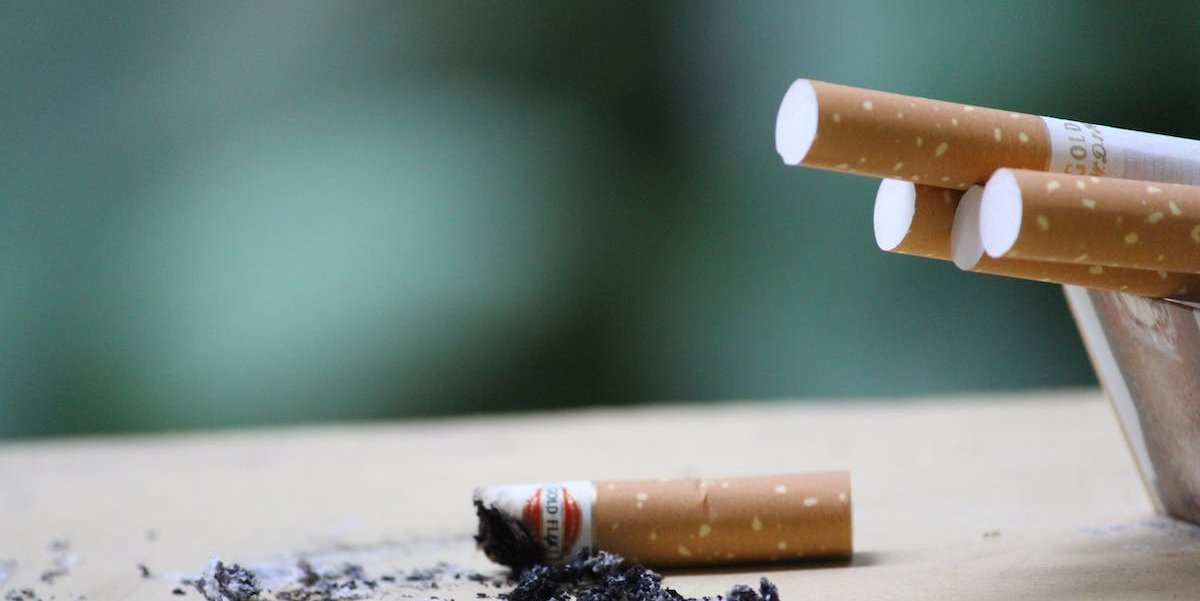

Australia’s unnecessary nicotine war lights up,
As reported on the website of ALIVE, the Australian vaping advocacy movement, “Australia's ongoing battle against tobacco has led to some of the strictest regulations in the world, particularly concerning vaping and cigarette pricing. While the government has framed these policies as necessary for public health, the unintended consequences have sparked a growing crisis.”
However, if you look across the history of drug regulation, it is obvious that the consequences were entirely predictable. And the inevitability is not just a lesson of history but lies deep within our DNA as a species.
Ronald K Seigel was a professor of psychopharmacology at the University of California, Los Angeles. In 2005, he wrote the first edition of a book called Intoxication: The Universal Drive for Mind-Altering Substances. His primary premise was that the drive to alter our states of consciousness is our fourth biological drive alongside food/water, sex, and sleep. He even gave examples of animals like elephants and chimpanzees seeking out windfalls of fermented fruit for the simple joy of getting wasted.
Seigel’s examples backed by the archaeological and historical record make it clear that since the discovery that grain can be made into alcohol, that opium can be extracted from poppies, and that some plants have hallucinogenic properties, a significant proportion of human endeavour over the past 5000 years has been devoted to changing the way we feel.
If you took a bird’s eye view of the planet you would spot thousands of acres devoted to the different grains used in the production of alcohol; tea and coffee plantations; and the sugar beet and cane used to sweeten them. You would see vineyards in Europe and right across the southern hemisphere; huge tobacco plantations in China, Brazil, India, the USA, and Indonesia; south American coca bushes, poppy fields across the Middle East, Asia, and Australia – with cannabis production now happening in hundreds of countries. You would see how mood-altering plants exist in the most extreme and contrasting environments from peyote cactus in the desert to hallucinogenic vines in the steaming jungle of the Amazon.
Swing over our urban landscapes and beneath you would see factories producing vast amounts of synthetic mind-altering drugs; tranquillisers, antidepressants, sleeping pills and painkillers and the chemicals used to produce all the synthetic recreational drugs such as amphetamine, ecstasy, and ketamine.
Beyond basic cultivation, there is all the infrastructure bringing the products to market. So just to take alcohol as an example, there are companies that manufacture alcohol, managing processes such as brewing, distillation, and bottling. There are companies supplying products and services such as farm machinery, distillation equipment, and freight services. Distribution and wholesaler intermediaries connect producers and vendors, typically storing and transporting the product. Then there are the sellers, both on licence (where drinks are bought and consumed on the premises such as pubs, clubs, and restaurants) and off licence (where the drinks are bought in stores and supermarkets for consumption elsewhere). Finally, alcohol companies employ agencies for marketing, consultancy, and lobbying. And then multiply that whole infrastructure across all the other globally available legal substances. The world of organised international drug trafficking also needs all the subsidiary business activities and infrastructure that bring drugs from field or lab to the street.
There is a popular myth associated with King Cnut, the 11th century King of Norway, Denmark, and England, that he sat on his throne by the seashore and tried to hold back the incoming tide by his royal command alone. In fact, it is believed he was demonstrating to his most sycophantic courtiers that there was a limit to his powers, even if he was one of the most contemporary powerful European rulers. The take home point is that there is always a limit to what rules, commands, acts of parliament or laws can achieve.
Yet, down the centuries, rulers have tried in vain to ban various substances, including tobacco and coffee. And not always on health grounds, although King James of Scotland and England in 1604 was quite on point about smoking, but often because it was believed such indulgence might undermine public morals or encourage gatherings of men who might plot sedition and treason. Often the lure of taxation as opposed to outright bans proved enticing for treasuries always desperate for income. Taxes and duties often led to an increase in smuggling of sought after products like alcohol, tobacco, and tea to escape duties, but rarely at a level that imperilled wider society.
But it is not until the last century that we really see the rise of what we would now recognise as international organised crime. In the early 20th century, criminals in cities like New York and Chicago were essentially small- time crooks engaged in localised hijacking, protection, loansharking, and illegal gambling. Then came Prohibition; drinking alcohol was not banned, but it was illegal to manufacture, transport or sell alcohol above 0.5% strength. Criminals swiftly became business executives; they built structured, hierarchical organisations and took on all the logistics of commerce – manufacturing, importing, supply chains, delivery, distribution, and sales. The main difference from legitimate business was the outbreak of bloody gang wars.
Once Prohibition was repealed in 1933, crime in the USA was well and truly ‘organised’ and transferred its skills to drugs but now needed to develop business relationships reaching across the world to Southeast Asia and to Latin America. The Netflix series Narcos certainly contains many fictional elements to enhance the dramatic effect. But one fact was inescapable, the drug trade turned unknown thugs from dirt poor barrios into billionaires. And the series did not have to invent the level of drug-related deaths and widespread corruption in Mexico nor Pablo Escobar’s public bombing campaign in Colombia. The lesson should be clear, if you try to ban or severely restrict access to a commodity that millions of people want, somebody else will step in and take over the trade – and they won’t ask nicely, and they will come with guns.
Another key point made by Seigel was that as Prohibition proceeds, the drugs get stronger and more dangerous. We can see that most obviously in the journey from coca leaf to cocaine to crack. This had nothing to do with ‘gateway theory,’ it was simply there were paradoxically additional fortunes to be made with crack because you could sell it to whole communities in America who couldn’t afford cocaine. Cannabis prohibition in the UK has seen the introduction of powerful chemicals which act on the same region of the brain as cannabis but are not otherwise related to the drug. These synthetic cannabinoid chemicals are sprayed on herb mixtures and smoked. The result is spice, which causes huge problems in UK prisons and in our most vulnerable communities.
Lastly, Seigel suggested that if we accept the reality of the ‘fourth drive’ (the desire to use substances that change how we feel), then it made sense to try and develop safer versions of the drugs that were killing people. This is where it gets complicated.
The Holy Grail of the pharmaceutical industry has long been the search for a non-addictive painkiller. However, any drug which is as effective as opium-based medicines or their synthetic formulations in treating physical pain runs the risk of being attractive to those seeking to deal with their own psychological pain, trauma, or just to get “high,” and lead to addiction. There have been many examples of this attempt to create a “safer” opiate. Most recently the Oxycodone scandal which showed that the industry was still trying to sell analgesic snake oil.
This is not to say that you cannot reduce the harms and risks of drug use by helping people make safer and less dangerous choices. Helping people avoid sharing needles, advice on how to avoid contaminants, reduce exposure to infections and tools to reverse overdose, all help reduce death and disease while not altering the nature of opiates themselves.
Of course, the risk of many drugs is associated with how it is consumed. None more so than with nicotine, where the combustible cigarette provide a system of delivery which ultimately leads to the premature death of over half those who use it. But in the early 2000s, a Chinese pharmacist created a device allowing consumption of nicotine without destroying its appeal while saving users from inhaling thousands of dangerous chemicals. With eight million death a year from smoking, surely this was a landmark victory for public health. Well sadly no. Too many countries have taken the view that vapes, and other non-combustible forms of nicotine, should be banned outright or at least controlled like cigarettes. And so now we come to an example of the perils of Australia’s narrow prohibitionist approach – the worst of all worlds.
Ideally, a true public health-oriented tobacco control policy should make combustible products relatively expensive through taxation while at the same time, maximising opportunities for those who either will not, or cannot, give up nicotine to switch to demonstrably safer nicotine products.
What the Australian government has done is make cigarettes insanely expensive while in effect banning vapes. The claim is that vapes are available from all pharmacies, yet a Freedom of Information request from the Australian Daily Telegraph revealed only 11% of pharmacies are prepared to stock them. Most think stocking vapes conflicts with their healthcare responsibilities, others find the regulations they must adhere to both time-consuming and complex. Consumers stay away because of the limited range of products and flavours. What happened next was entirely predictable.
Since 2019, cigarette prices in Australia have risen by nearly 70% with more price hikes on the way. A packet of 20 cigarettes costs around AU$ 50 ($33 USD) making them the world’s most expensive cigarettes. Combined with the de facto ban on vapes has created an illicit nicotine market valued by some estimates at over AU$ 7.5 billion ($5 billion USD). Not only that, but according to the government tax office, tobacco revenues have plummeted since 2019 from around AU$16 billion to AU$ 7 billion. And no guesses who is profiting.
The illicit trade in cigarettes is dominated by international organised crime groups and domestic rival outlaw biker gangs. The latter, often established in the sixties, had long been associated with the manufacture, distribution, and sale of methamphetamine much as their American counterparts had done.
A prohibition sidebar took place in the late 1990s-early 2000s when Australia and New Zealand experienced a heroin shortage. Helped initially by chemists from eastern Eutope, heroin traffickers switched to manufacturing and exporting methamphetamine so that by the mid-2000s, methamphetamine was one of Australia’s main illegal drugs. Now, thanks to government policy, another highly lucrative market in illicit cigarettes and vapes has opened up. And with the new source of income came the violence of turf wars and a particularly insidious practice called ‘earn or burn.’
In Latin America it was called ‘silver or lead’ – you took the bribe or risked being shot. Mainly in Australia’s Victoria state (where Melbourne is the country’s illicit tobacco trade hub) gangs, often using kids, threaten tobacconists to sell smuggled cigarettes or risk having their premises torched – the current tally across Australia is 250 shops burnt down.
Of course, the government must act and so what should have been a public health matter has now become a law enforcement issue and a hugely expensive one at that. A plethora of agencies are involved dealing with tobacco excise, gangland violence and arson, pharmacy regulation, border control and more, each agency with its own narrow focus. There is other collateral damage such as insurance companies refusing to insure tobacconists or even other business premises close-by and worst of all, in February, a mother killed in a tobacco-war arson attack at the wrong address.
With its current approach to tobacco, Australia’s ‘control’ policy has been ceded in large part to organised crime by creating a prohibition ‘premium’ of legal cigarettes costing around ten times a pack of the illegal product and doing its utmost to drive vape consumers onto the illegal market.
The political, moral, and legal arguments around drug prohibition in general are too complex to be thrashed out in this piece. But what is happening in Australia is entirely unnecessary. Tobacco is still legal: the war stems from price controls, excise, and restricted channels, not outright banning, although vapes are closer to being banned than cigarettes.
The government could easily dial down on cigarette pricing and lift restrictions on vapes along with perhaps a New Zealand-style retailer licensing regime and a specialist vape shop allowance of around fifty different simply labelled flavours (no gummy bears for example). This would help assuage concerns about youth access while still encouraging adult take-up.
Although numbers are falling, there are still over two million adult smokers in Australia. Realistically, for many years to come, there will continue to be a market for illegal cigarettes and vapes as they will always be cheaper than legitimate products even if inferior. So, the fourth drive will not be denied but can be regulated.